Every golfer wants more distance, and distance starts with clubhead speed. The problem is that most speed training advice boils down to “swing harder,” which is about as useful as telling someone to “just relax” on the first tee. SuperSpeed Golf takes a different approach: a set of three weighted training clubs and a simple overspeed protocol that has helped everyone from weekend golfers to Phil Mickelson pick up real, measurable miles per hour.
But does SuperSpeed Golf actually work, or is it another training fad with good marketing? I dug into the published research, long-term reviews from MyGolfSpy and GOLF.com, forum threads from golfers who stuck with the program for months, and the company’s own claims to give you an honest, research-based SuperSpeed Golf review. No hype, no hands-on fairy tales. Just what the evidence says.
Quick Verdict
Price: $199.99 (Speed Sticks Pro) · Rating: ★★★★★ 4.6/5
Best for: Golfers who want more clubhead speed and can commit to 10-15 minutes, three times a week.
Bottom line: SuperSpeed Golf is the original overspeed training system, and the evidence says it works. Most disciplined users gain 3-7 mph of clubhead speed in the first couple of months. It is not magic, it demands consistency, and max-effort swings carry some injury risk. But for the price and time involved, it is one of the best-documented ways to get faster.
What Is SuperSpeed Golf?
SuperSpeed Golf is a swing speed training system built around an overspeed training set of 3 weighted, driver-length clubs. The idea is simple: swing clubs that are lighter than your driver as fast as you possibly can, and your body learns to move faster than it thought possible. This is called overspeed training, and SuperSpeed was the company that brought it to golf back in 2014.
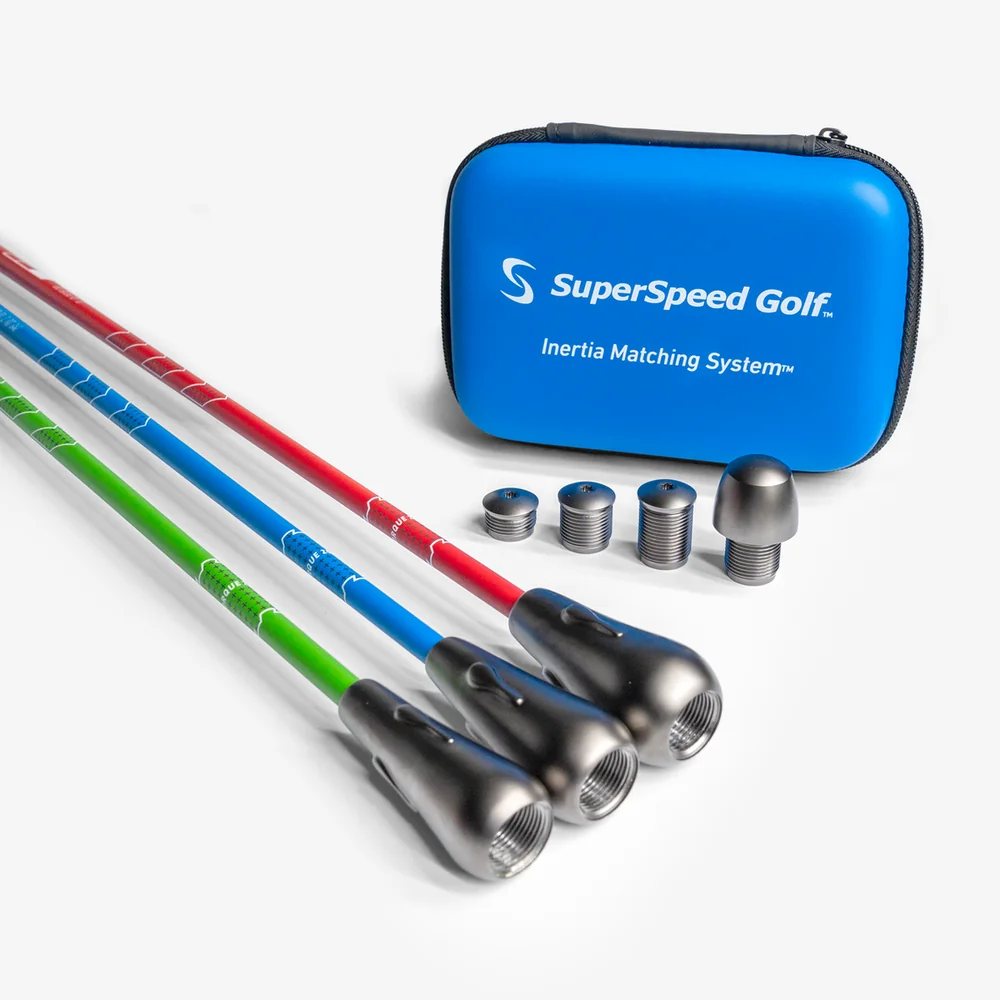
The current second-generation set, called Speed Sticks Pro, includes three 45-inch graphite clubs:
- Green (255g): About 20 percent lighter than a typical driver. This is the pure speed stick.
- Blue (290g): About 10 percent lighter than a driver. The middle ground.
- Red (335g): About 5 percent heavier than a driver. Builds strength through the hitting zone.
The set is ambidextrous, so lefties and righties use the same clubs. If your swing speed is under 85 mph, the company recommends the Senior/Ladies set instead, which runs lighter (starting at 220g). There are also junior sizes for kids ages 5 to 14, and a four-club Coaches set.
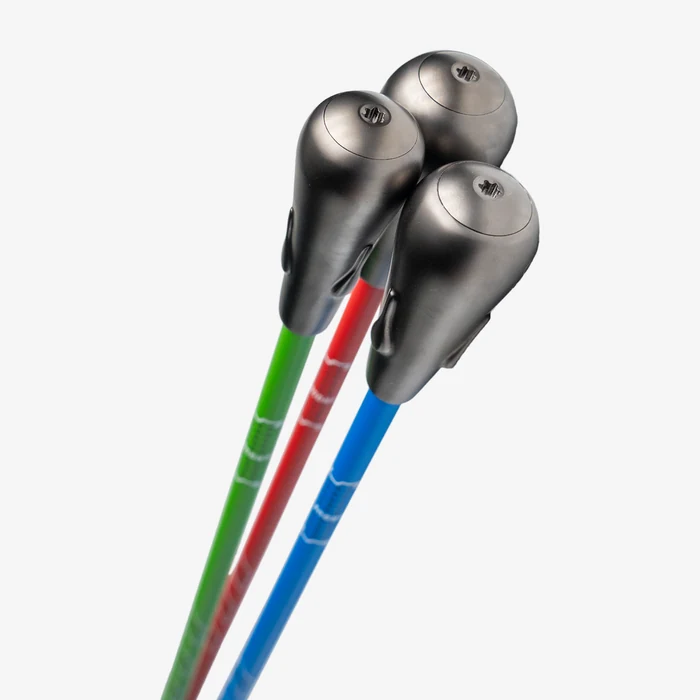
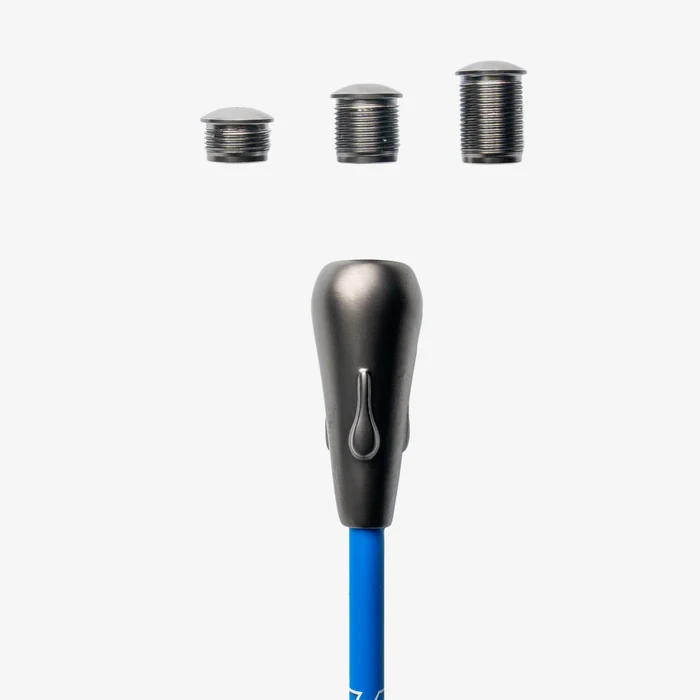
The Speed Sticks Pro version added aerodynamic clubhead tips, a weight kit for fine-tuning (20g, 30g, and 40g add-ons plus an 80g travel weight), and redesigned shafts and grips. Everything is guided by the free SuperSpeed app, which walks you through the protocols level by level.
How Does SuperSpeed Golf Work?
If you are wondering how SuperSpeed Golf works, here is the short version: your brain has a speed governor. Years of swinging the same driver at the same effort have taught your nervous system that a certain speed is “max.” Overspeed training tricks that governor by having you swing lighter clubs at absolute maximum effort, repeatedly. Your body adapts by recruiting muscle fibers faster and sequencing the swing more efficiently.
The alternating light, medium, and heavy clubs matter too. Swinging the light green stick pushes your ceiling. The blue stick grooves that new speed into something closer to your gamer. The heavy red stick builds the strength to support it. Researchers call this contrast training, and it is the same principle sprinters use with downhill running and weighted sleds.
One thing worth knowing: this is a neuromuscular adaptation, not a fitness program. You are not getting stronger in the weight-room sense. You are teaching your body to fire faster. That is why the sessions are so short, and why swinging tired or sloppy defeats the purpose. Every rep should be maximum intent.
How to Use SuperSpeed Golf
Learning how to use SuperSpeed Golf is straightforward because the app does the thinking for you. The basic structure:
- Warm up with some easy swings and light stretching.
- Follow the app’s protocol: sets of max-effort swings with each club, alternating sides (yes, you swing left-handed too if you are right-handed).
- Each session takes 10 to 15 minutes. That is it.
- Repeat three times per week, with rest days between sessions.
The most common question is “SuperSpeed Golf, how many times a week?” The answer from the company and from every reviewer who got results: three. Not two, not five. Three sessions with recovery days is the protocol the research was built on, and users who tried to cram in extra sessions generally report worse results, not better.
The app has five progressive levels. You start at Level 1 and graduate as your speeds plateau. A launch monitor helps you track progress (the company sells a bundle with the PRGR monitor), but it is not required. Plenty of users just track their fastest swing feel and re-test monthly.
Does SuperSpeed Golf Work?
Short answer: yes, for most people who actually follow the protocol. This is one of the better-documented claims in golf training aids.
The best published data comes from studies led by Dr. Tyler Standifird at Utah Valley University. In one six-week study of 15 golfers, average clubhead speed went up 5 mph, ball speed up 8 mph, and carry distance up 16 yards. A second study on non-dominant-side-only training still produced a 6.4 mph gain. Fair note: Standifird is a disclosed paid consultant for SuperSpeed, so treat the numbers as optimistic rather than gospel.
Independent testing tells a similar story at slightly lower numbers. MyGolfSpy‘s community case study tracked testers over 10 weeks and saw gains of roughly 5 to 9 mph. GOLF.com tested the Speed Sticks Pro over 12 weeks and measured a 3.8 mph gain (114.4 to 118.2 mph). Across forums like GolfWRX and Reddit’s r/golf, the consensus from long-term users lands around 3 to 7 mph in the first two months with disciplined three-times-a-week use.
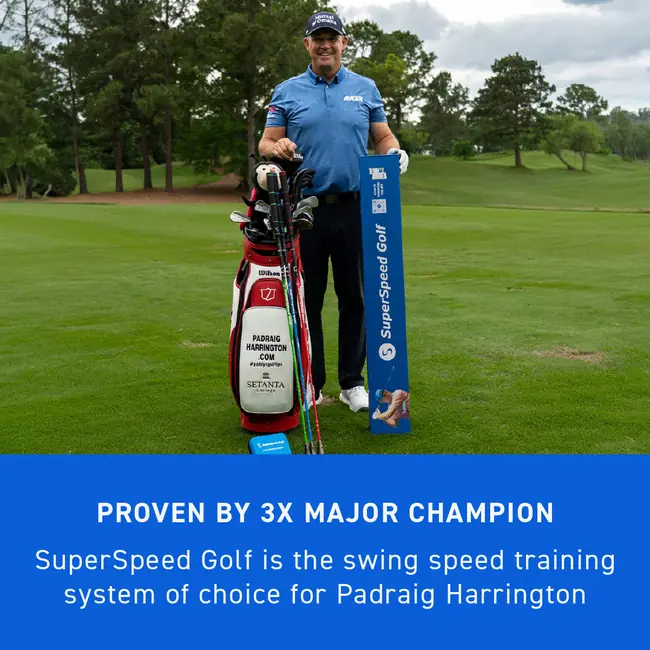
The most famous data point belongs to Phil Mickelson, who has credited SuperSpeed with taking him from 116 to 120 mph of clubhead speed in 2018-19, at an age when most players are slowing down. Padraig Harrington, a brand ambassador, reportedly gained 15 yards and was clocking 118 mph at age 53.
The honest caveats: the company’s own “10.5 to 11 percent” gain stats come from self-reported app users, which is marketing, not science. And radar gains do not always translate to the course. Several users report swinging faster on the monitor but struggling with dispersion when they bring that speed to real tee shots. Speed without control is just a faster miss.
SuperSpeed Golf vs The Competition
SuperSpeed invented this category, but it is not alone anymore. Here is how the main options stack up:
| SuperSpeed Golf | TheStack | Rypstick | Generic speed sticks | |
|---|---|---|---|---|
| Price | $199.99 | $299 | $199 | $40-75 |
| What you get | 3 weighted clubs | 1 club + weight set | 1 adjustable club | 3 basic clubs |
| Programming | App, 5 levels | Adaptive app (AI-driven) | App included | None / DIY |
| Best for | Simple, proven protocol | Data nerds, customization | Travel, simplicity | Tight budgets |
| Evidence base | Strongest (studies + years of user data) | Growing (used by Matt Fitzpatrick) | Decent | Thin |
| Reviewer verdict | Best overall value | Best tech | Best one-club option | Skip unless broke |
TheStack ($299) is the serious challenger. Designed with biomechanist Dr. Sasho MacKenzie, it uses a single club with adjustable weights and an app that adapts the program to your data. Matt Fitzpatrick famously used it during his 2022 U.S. Open run. It is the smarter system, but it costs more and the radar is a separate purchase.
Rypstick ($199) takes the minimalist route: one club with eight weight combinations, no subscription, and a 60-day 15-yard guarantee. Good for travelers who do not want three clubs rattling around.
Generic speed sticks ($40-75 on Amazon) copy the three-club format without the protocol, app, or research. A few users get results with them, but you are on your own for programming, and quality control is hit or miss.
Breaking Eighty summed up the landscape well: SuperSpeed is “a tool, not a system” compared to TheStack’s data-driven approach. Fair. But it is also the original, the cheapest branded option, and the one with the longest track record.
SuperSpeed Golf Pros and Cons
Pros
- Real, measurable speed gains backed by published research
- Tiny time commitment: 10-15 minutes, 3x per week
- Simple guided protocols in the free app, no guesswork
- Good value at $199.99 vs. competitors
- 30-day speed-gain guarantee
- Used by tour pros, longest track record in the category
Cons
- Injury reports (back, neck, elbow) are the most serious criticism
- Requires strict 3x/week compliance; skippers see nothing
- Radar gains do not always transfer to course distance
- Plateaus after 6-12 weeks without added strength work
- Can disrupt timing if used during competitive season
- Max-effort swings feel violent at first; not for everyone
The injury point deserves emphasis because it is the one thing reviewers consistently warn about. Max-effort swings with light clubs put unusual stress on the back, neck, and elbows. The company includes warm-up guidance, and most injury reports come from users who skipped it or jumped straight to Level 3. Warm up properly, progress through the levels in order, and stop if something hurts. This is not the training aid to be a hero with.
Who Should Buy SuperSpeed Golf?
SuperSpeed Golf makes the most sense for a specific golfer: someone who is reasonably fit, plays regularly, and wants more distance without rebuilding their swing. If you have ever been on a launch monitor, seen a swing speed number, and thought “I should be faster than that,” this is your product.
It is less compelling if you are currently injured, have a history of back problems, or cannot commit to three sessions a week. The program only works with consistency. Buying the sticks and using them twice is just expensive garage decor.
Timing matters too. Multiple long-term users advise doing the program in the off-season, not during your competitive stretch. Grooving new speed can temporarily mess with your timing and dispersion. Build the speed in winter, learn to control it in spring.
For golfers deciding between systems (see also our best golf swing trainers roundup): pick SuperSpeed if you want the proven, simple, affordable route. Pick TheStack if you love data and want adaptive programming. Pick Rypstick if you travel constantly and want one club. They all work on the same principle; the differences are packaging and price.
SuperSpeed Golf FAQs
How does SuperSpeed Golf work?
SuperSpeed Golf uses overspeed training: you make max-effort swings with clubs lighter than your driver, which pushes your neuromuscular system past its normal speed ceiling. Alternating light, medium, and heavy clubs (contrast training) teaches your body to recruit muscle fibers faster. Sessions take 10-15 minutes, three times per week, guided by the free app.
Does SuperSpeed Golf work?
Yes, for most users who follow the protocol. Published studies show around 5 mph of clubhead speed gain in six weeks. Independent testers at MyGolfSpy and GOLF.com measured 3.8 to 9 mph over 10-12 weeks. Forum consensus lands around 3-7 mph in the first two months with disciplined three-times-a-week use. Results vary, and radar gains do not always transfer directly to course distance.
How many times a week should you use SuperSpeed Golf?
Three times per week, with rest days between sessions. This is the protocol the research was built on. Users who tried extra sessions generally report worse results, not better. Each session takes only 10 to 15 minutes.
How to use SuperSpeed Golf training system?
Warm up, then follow the app’s protocol: sets of max-effort swings with each of the three clubs (green, blue, red), swinging both dominant and non-dominant sides. Progress through five levels as your speeds plateau. A launch monitor helps track progress but is not required.
Is SuperSpeed Golf worth it?
If you want more clubhead speed and can commit to three short sessions a week, most long-term reviewers say yes. At $199.99 with a 30-day speed-gain guarantee, it is the cheapest branded option with the strongest evidence base. Factor in the injury risk: warm up properly and progress through the levels in order.
Can seniors or ladies use SuperSpeed Golf?
Yes. SuperSpeed makes a dedicated Senior/Ladies set with lighter clubs (starting at 220g) designed for swing speeds under 85 mph. The overspeed principle works the same regardless of age or gender; the lighter set just matches the protocol to slower baseline speeds.
How We Research:
We don’t fake hands-on testing. Every review is built from the manufacturer’s published specs, independent expert reviews, published research, and patterns across dozens of buyer comments. If we can’t verify a claim, we say so.
Final Verdict
SuperSpeed Golf is one of the rare training aids where the marketing and the evidence actually agree. Overspeed training works, the protocol is simple enough that people actually follow it, and 10-15 minutes three times a week is a commitment almost anyone can keep. Typical gains of 3-7 mph translate to real yards for most golfers.
The caveats are real: max-effort swings carry injury risk if you skip the warm-up or rush the levels, and radar speed does not automatically become course distance. But at $199.99 with a 30-day speed-gain guarantee, backed by published research and a decade-long track record, this is one of the safest bets in golf training aids. If more distance is your goal, SuperSpeed Golf will make you faster. What you do with that speed is up to you.