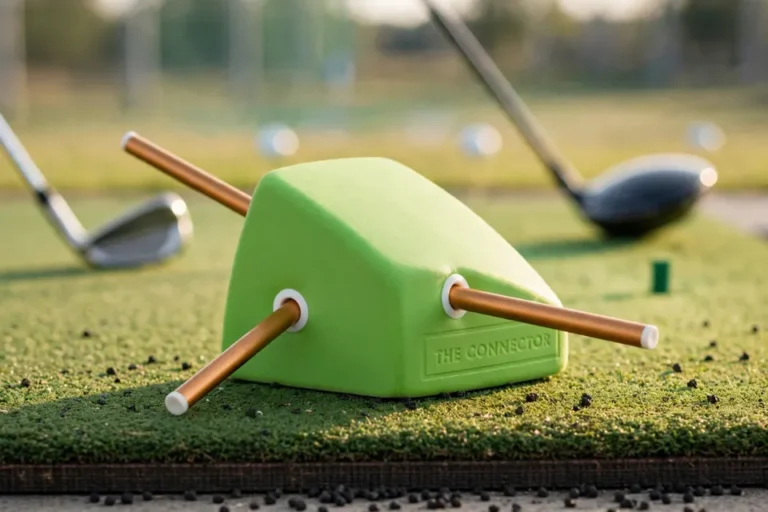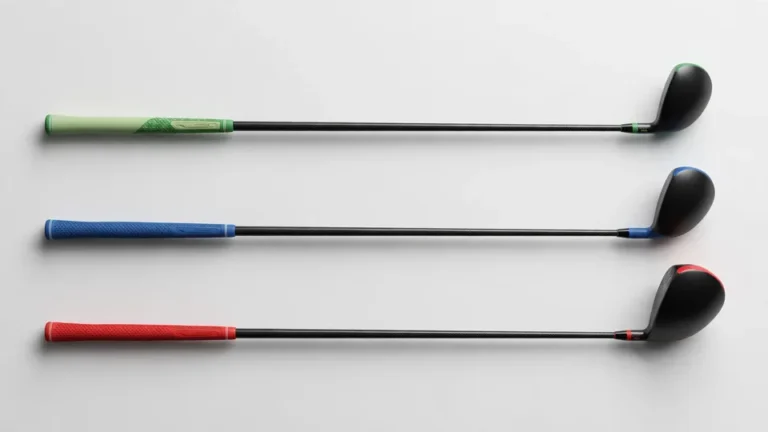
You can stripe your 7-iron all day, then pull the driver and watch the ball peel off to the right like it owes the trees money. Most golfers try to fix it with the wrong tools, a new driver, aiming left, swinging softer, but a slice is simply your clubface sitting open relative to your swing path at impact, and the driver punishes that combination more than any other club. The setup checks and five drills below attack both variables with nothing but a headcover, a tee, and an honest look at your own swing.
- A slice means your clubface is open relative to your swing path, and the driver punishes it more than any other club.
- 5 free drills: headcover gate, split-hand, closed stance, toe-up, feet together.
- Check your grip (2–3 knuckles), ball position (inside front heel), and tee height before you drill.
- You’ll feel it in one session; you’ll own it in 3–4 weeks. Film yourself. Feel isn’t real.
Why You Slice the Driver (But Not Your Irons)
Quick detour, because it helps to know what you are fighting. And the driver really is a special case.
The driver is the longest club in your bag with the lowest loft, which means the margin for error on face and path is smaller than with any other club. A face that is two degrees open with a 7-iron is a gentle fade. Two degrees open with a driver is a ball in the next fairway. Add in the fact that most amateurs overswing the driver, trying to murder it, and you get a long backswing, a loss of clubface control, and an out-to-in path. That combination is a slice factory.
So which is it for you, face or path? Here is a quick read from PGA coach John Jacobs that actually works on the range. If your ball starts at your target and then slices right, your path is the problem (out to in). If it starts right and slices further right, your face is open. If it starts left and still slices back across to the right, congratulations, you have both. Most slicers have a bit of both, which is why the drills below attack face and path together.
The usual suspects behind both: a weak lead-hand grip (knuckles hidden, Vs pointing at your chin instead of your trail shoulder), an over-the-top transition where the shoulders fire before the hips, and hanging back on your trail foot instead of shifting forward. Every drill below is aimed at one of these. Pick the one that matches your miss.
First: The 60-Second Setup Fix
Before any drill, check these three setup items. Most golfers trying to stop slicing the driver skip straight to swing tips, but a shocking number of slices are setup problems wearing a swing-problem costume.
- Grip: You should see two to three knuckles on your lead hand at address, and the Vs formed by each thumb and forefinger should point at your trail shoulder. If your Vs point at your chin, your grip is weak and your face will be open. This alone fixes a meaningful percentage of slices.
- Ball position: Just inside your front heel. Too far back and you will hit down on it and cut across; too far forward and the face has extra time to hang open.
- Tee height: About half the ball should sit above the crown of the driver. Too low and you will swing down steeply across it; too high and you will swing up too much and leave the face open.
Do these checks before every range session in this program. They take a minute and they remove variables, so the drills can do their real job.

Drill 1: The Headcover Gate
- What it fixes: An out-to-in path, with feedback you cannot argue with. This is the single best path drill for slicers.
How to do it:
- Place a headcover (or a rolled towel) on the ground a few inches outside the ball and slightly behind it, on the target side of your swing arc.
- Take your normal driver setup and make slow half swings. Your only job: miss the headcover on the way down.
- If you come over the top, you will clip it immediately. If your path comes from the inside, the club misses it cleanly.
- Once you can miss it ten times in a row at half speed, work up to three-quarter swings, then full.
Start without a ball for the first dozen reps. The obstacle does the teaching, and your brain learns the inside path faster when it is not also trying to hit something.
- Common mistake: Putting the headcover too close to the ball, so even a decent inside path clips it. Give it a few inches of clearance. You are training path, not threading a needle.
Drill 2: The Split-Hand Drill
- What it fixes: A face that will not square up. This one teaches your forearms to rotate and release instead of holding the face open through impact.
How to do it:
- Grip your driver normally, then slide your trail hand down so there is a three to four inch gap between your hands.
- Make slow half swings. The split grip exaggerates the feeling of your forearms rotating through the hitting zone.
- Watch the clubface: you should feel it turning over (closing) as you swing through, not held open.
- Do 15 to 20 reps, then take a few normal swings and try to recreate that rotation feeling.
This drill feels weird for about five swings and then it clicks. Golfers who “hold off” the face through impact, usually because someone once told them to, find this one eye-opening.
- Common mistake: Flipping the hands aggressively to manufacture rotation. The rotation should feel like a natural roll of the forearms, not a last-second snap. Slow is the whole point.
Drill 3: The Closed-Stance Drill
- What it fixes: Path, from the ground up. Changing your stance line forces an inside-out path without a single swing thought.
How to do it:
- Set up to the ball, then pull your trail foot back six to eight inches, so your stance line points well right of the target (for a right-hander).
- Keep your shoulders square to the target. Only the feet move.
- Hit balls. With the trail foot back, it is biomechanically awkward to come over the top, so your body self-organizes into an inside path.
- Hit ten balls like this, then square your stance up and hit five normal ones, trying to keep the same feeling.
This is a favorite of teaching pros because there is nothing to think about. The stance does the work. If you have ever wondered what an inside path actually feels like, this drill shows you in about three swings.
- Common mistake: Aiming your shoulders right along with your feet. Then you are just aimed right and still slicing. Shoulders stay square; only the trail foot drops back.
Drill 4: The Toe-Up Drill
- What it fixes: Clubface awareness. Most slicers have no idea where their clubface is during the swing. This drill builds that map.
How to do it:
- Without a ball, make half swings and stop when the shaft is parallel to the ground on the takeaway. The toe of the club should point straight up at the sky.
- Swing through to the same position on the follow-through: shaft parallel, toe pointing up.
- Do 20 reps. Toe up, toe up. That is the whole drill.
- Now hit balls with that same feeling of the face rotating correctly through the zone.
If your takeaway toe points behind you instead of up, your face is already rolling open on the way back, and no downswing drill will save you. This is the diagnostic most slicers skip.
- Common mistake: Rushing it. The value is in the checkpoints, not the swing. Slow half swings, verify the toe, then go.
Drill 5: The Feet-Together Drill
- What it fixes: Overswinging and lunging, the two tempo killers that destroy both face and path with the driver.
How to do it:
- Set up with your feet touching, ball teed in the normal spot.
- Make smooth three-quarter swings. With no base to lunge from, your body has to stay centered and rotate instead of sliding.
- Hit balls like this. You will be shocked how far they go with what feels like 70 percent effort.
- After ten balls, take your normal stance and keep the same smooth tempo.
Almost every slicer swings the driver harder than any other club, and harder almost always means steeper and more open. This drill proves to your nervous system that smooth goes further than violent. It is a lesson most golfers need to feel, not hear.
- Common mistake: Trying to kill it from feet together to “prove” you still can. You will fall over, which is actually the lesson. Smooth and balanced beats hard and wild, every time.
How Long Until the Slice Is Gone?
Honest answer: you will feel the fix in one range session. The first time you swing from the inside and watch the ball start right and draw back, it feels like cheating. That sensation is unmistakable.
But one range session is not a cured slice. Give it three to four weeks of regular practice, a couple of range sessions a week plus a few minutes of slow-motion reps at home. Here is the progression that works: one drill per session, not all five at once. Master the headcover gate until missing it is boring, then move on. And film yourself from behind the target line with your phone. Feel is not real, and what feels like an inside path is often still over the top on camera.
One more thing: expect the pendulum to swing too far at first. Many golfers go from slice to hook while grooving an inside path. That is not failure, that is progress. A hook means your path fixed and now your face needs to catch up, which is exactly what the split-hand and toe-up drills are for. Dial it back from there.
Frequently Asked Questions
Why am I slicing my driver all of a sudden?
A slice that appears out of nowhere is almost always one of three things: your grip drifted weak, your ball position crept too far forward, or you started overswinging. Check the setup fixes at the top of this guide first. If your grip, ball position, and tee height are correct and the slice is still there, it is a path or face issue, and the drills above will sort it.
Why do I slice my driver but not my irons?
The driver is the longest club with the least loft, so the margin for error on face angle and swing path is the smallest in your bag. A two-degree open face is a gentle fade with a 7-iron and a lost ball with a driver. Most golfers also swing the driver harder and longer, which costs them clubface control. Your iron swing is probably not perfect either, the driver just punishes the same flaws more.
Can a new driver fix my slice?
Partly, temporarily. A draw-biased driver, more loft, or a properly fitted shaft can reduce the curve while you work on technique. But equipment treats the symptom. If your path is out to in and your face is open, a new driver just gives you a more expensive slice. Fix the swing with the drills above, then get fitted, you will gain far more from the fitting once the big miss is gone.
Should I just aim left and play my slice?
It works until it does not. A controlled fade is a legitimate shot, tour players use it. But a real slice is not controlled, it is a miss that gets worse under pressure and costs you distance (slice spin balloons the ball and kills rollout). Aiming left also trains your brain to keep the faulty pattern. Better to spend a month fixing it properly than a career managing it.
Is it my swing path or my clubface?
Read your ball flight. Starts at the target then curves right: path (out to in). Starts right and curves further right: open face. Starts left and slices back across to the right: both. Most slicers have a mix, which is why this guide pairs path drills (headcover gate, closed stance) with face drills (split hands, toe-up).
How is this different from shallowing the club?
Related but not identical. Shallowing fixes a steep downswing, which often causes the out-to-in path behind a slice. If you shallow the club well and still slice, your problem is mostly the face. The two guides pair nicely: my shallow-the-club drills handle the transition, these drills handle face and path with the driver specifically.
The Bottom Line
If you want to stop slicing the driver, stop buying new drivers to fix your slice. Check your grip, ball position, and tee height, then pick one drill and own it before moving to the next. The headcover gate for path, the split-hand drill for face. Film yourself, because feel lies. In a month of honest practice, the big banana ball can be gone, and the fairways get a whole lot wider.
And if you want to see how training aids fit into the picture, my best golf swing trainers roundup covers the ones actually worth your money, including options that give you the same instant path feedback these drills teach for free.